
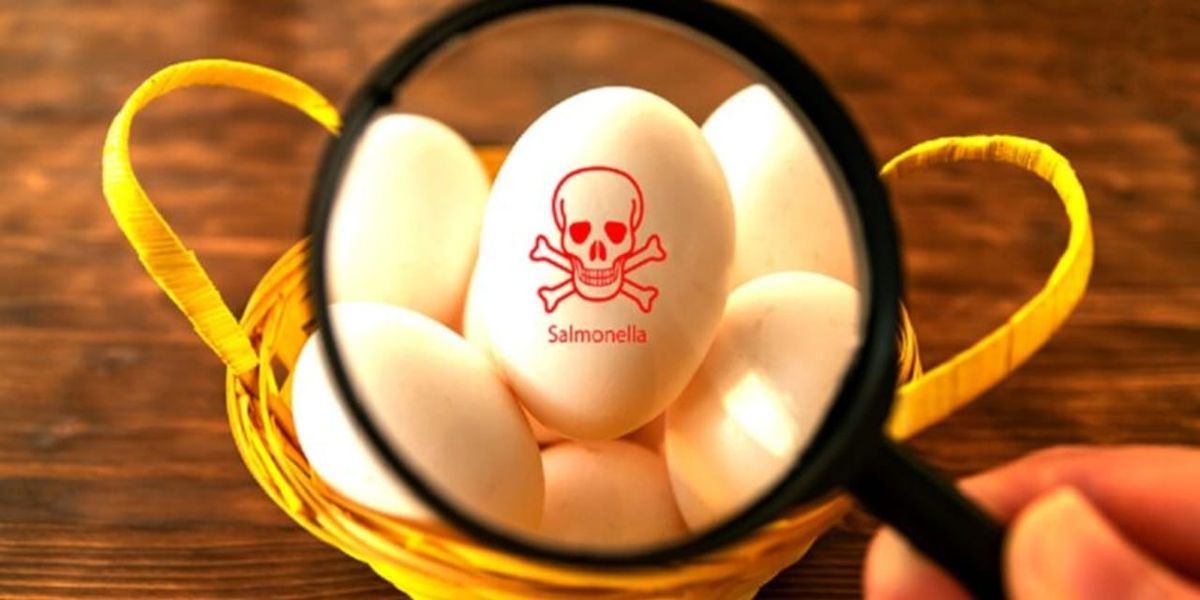
A Salmonella outbreak in the United Kingdom has been linked to imported eggs from Ukraine, resulting in nearly 80 illnesses across 2025 and 2026. Whole genome sequencing confirmed that the strain matches isolates found in human infections, with 36 cases recorded in 2025 and 40 in 2026.
The UK Health Security Agency (UKHSA) detected Salmonella Enteritidis in pooled egg samples during microbiological testing of nearly 3,000 eggs as part of a broader imported egg investigation involving roughly 700 patients. The affected eggs originated from Yasensvit—part of the Ovostar Union Group, a major European egg producer—and carry the stamp code 3UA1012066. Consequently, the Food Standards Agency (FSA) and Food Standards Scotland (FSS) advised businesses to stop utilizing these products. Yasensvit previously urged the public to avoid premature conclusions until all facts are confirmed. Meanwhile, Ukrainian food safety authorities announced plans to inspect the Kyiv-based company and take product samples for laboratory testing.
The 78 confirmed UK cases span from December 2024 through September 2026, with the vast majority in England alongside two cases in Wales. Patients range in age from under 1 to 99 years old, with a median age of 30, and slightly over half are female. Geographically, London and the East of England account for the highest concentrations. Additionally, a separate June 2026 cluster involved six patients linked to a Yorkshire and Humber restaurant that utilized non-UK eggs for specific dishes.
In a separate update, public health agencies in England, Scotland, and Wales reported on travel-associated Cyclospora infections. Cyclosporiasis cases peaked in June and July 2026 before declining in August and September. Between April and September, 135 cases were reported—81 in England, 43 in Scotland, and 11 in Wales—with a median patient age of 47 and a majority female demographic. Among cases with available travel history, the vast majority had visited Mexico, primarily the Riviera Maya region, while staying at various hotels and consuming diverse all-inclusive food and drink offerings. By comparison, the UK recorded 87 cases in 2025 and 124 in 2024. Because the parasite does not naturally occur in the UK, health authorities advise travelers to Mexico and other endemic areas to practice safe food and water hygiene, such as consuming bottled water and thoroughly cooked foods.