
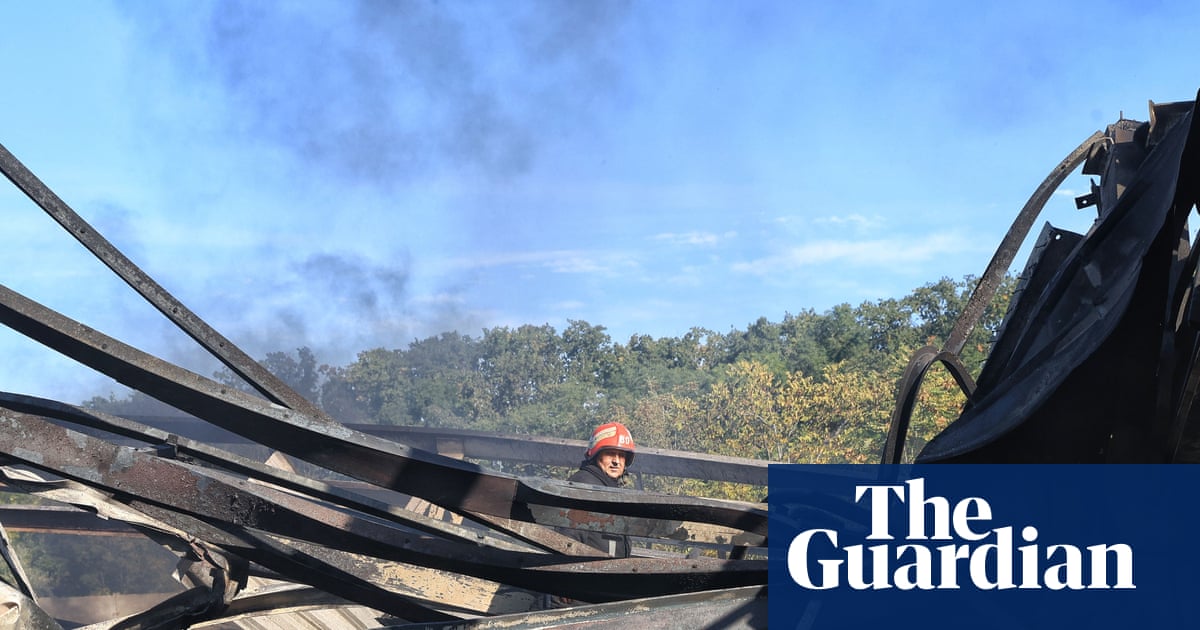
According to Ukraine’s economy minister, Oleksandr Kravchenko, air raid alerts are costing the Ukrainian economy an estimated $45 million for every hour they halt businesses. As Russia intensifies its bombardment, targeting the infrastructure supporting Ukraine’s economy—including industrial sites, warehouses, logistics hubs, and datacentres—workers are frequently forced into shelters, resulting in sirens lasting up to 10 hours a day.
To mitigate these economic losses, the Ukrainian government implemented a two-tier warning system. A red alert indicates a missile threat requiring people to take shelter, whereas a yellow warning is designated for drone threats, allowing numerous businesses to keep operating. Although over half of businesses continue to function during yellow alerts, these warnings do not guarantee safety; a Russian jet-powered drone recently struck the National Academy of Sciences in central Kyiv during a yellow alert, killing two people.
Since the beginning of the year, Russian attacks have caused an estimated $10 billion in damage to fixed assets. Despite these harsh conditions, Kravchenko noted that the government is better prepared for the upcoming winter. To enhance protection, authorities are discussing allowing private companies to purchase Ukraine’s air-defence systems, though the minister acknowledged that complete protection against Russian weapons is impossible.
The continuous damage has exacerbated severe financial strain on the state. While the budget shortfall for the year was initially estimated by President Volodymyr Zelenskyy at $27 billion, the government has reduced it to $20 billion through spending cuts and domestic reserves. Kyiv is actively seeking additional international funding from the EU, Japan, Canada, and the UK, including potentially bringing forward loans earmarked for the following year. Kravchenko attributed the budget gap to weaker-than-expected state revenues and the escalating costs of the war—such as acquiring more air-defence systems and interceptor drones—rather than mismanagement or corruption.
Domestically and internationally, government trust remains challenged by high-profile corruption concerns and public perception issues. A recent poll indicates that governmental corruption is a primary concern for citizens, and external financing needs for 2027 are projected at $52.6 billion, with only about $20 billion currently secured amid growing war fatigue in Europe.