
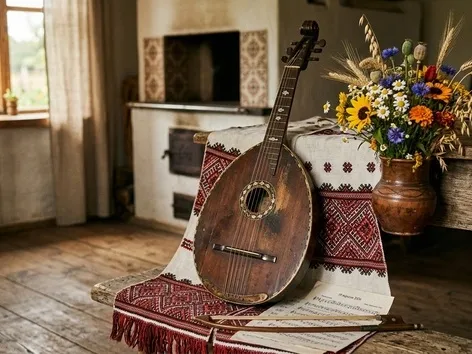
Ukrainian Music Day is a new holiday celebrated annually on the third Saturday of September, with its first celebration taking place on September 19, 2026. The Verkhovna Rada officially approved the establishment of this commemorative day on May 27, 2026, with 292 members of parliament voting in favor.
The date was chosen in reference to the “Chervona Ruta” youth music festival held in Chernivtsi on September 17, 1989. That festival served as a major cultural milestone during which the previously banned anthem “Shche ne vmerla Ukraina” was performed publicly and openly for the first time, marking a symbol of national awakening and serving as a bridge to today’s music scene.
The holiday is designed to honor the contributions of performers, composers, and music industry workers to national culture. Beyond this, the resolution establishes a broader context linked to supporting cultural resistance against Russian armed aggression, strengthening a Ukrainian cultural space free from Russian influence, and utilizing cultural diplomacy internationally to showcase the centuries-old tradition of Ukrainian music beyond wartime songs.
The history of Ukrainian music spans ten centuries, encompassing traditions from pre-Christian ritual songs, such as the “Kust” songs of Polissia which are preserved in UNESCO’s audio collection, to the modern classical school. Key historical figures include Dmytro Bortniansky, an 18th-century composer who studied in Italy alongside Mozart and achieved international acclaim, and Semen Hulak-Artemovsky, who composed the pioneering Ukrainian opera “Zaporozhets beyond the Danube” in 1862. Mykola Lysenko is recognized as the founder of the national classical school, having dedicated his career to collecting hundreds of folk song arrangements in Ukraine. The 20th century also brought severe challenges, including the suppression of composer Vasyl Barvinsky, whose works were burned in 1948 before his exile, and Borys Lyatoshynsky, whose opera “The Golden Hoop” faced censorship for alleged modernism.