
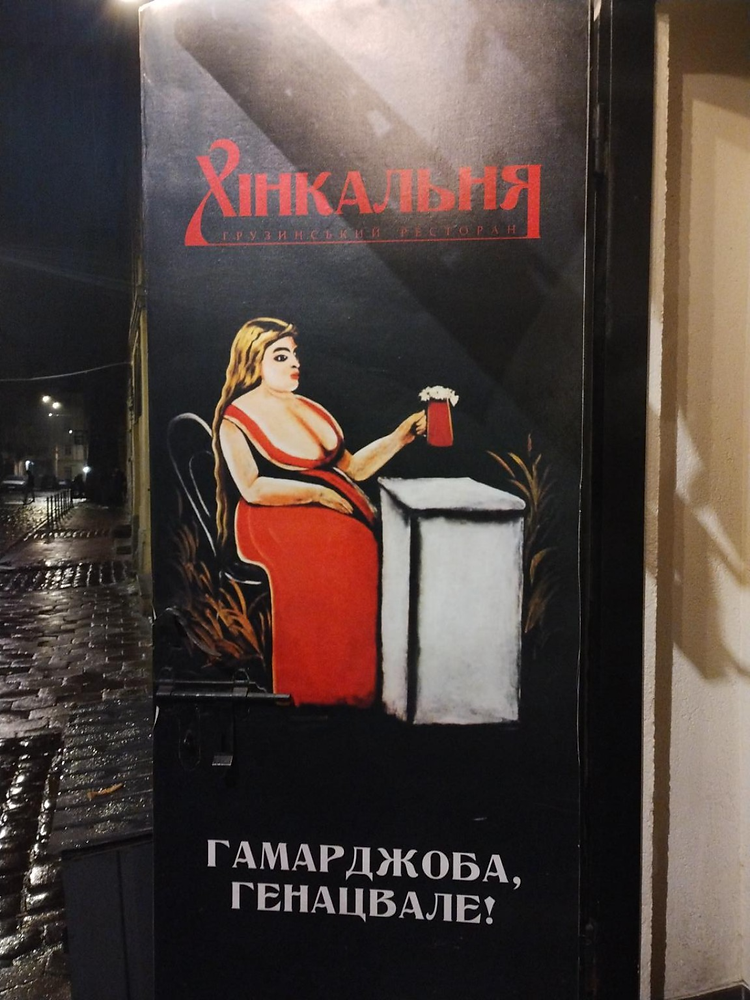
Khinkalnya is a successful international restaurant franchise that serves Georgian cuisine, yet it is fundamentally a Ukrainian commercial enterprise founded in Lviv. Established in April 2014 by Vadym Kostenko during the Revolution of Dignity, the restaurant began as a modest response to economic instability and the need to diversify away from the automobile sector. Kostenko identified an unoccupied niche in the market by focusing on *khinkali*, the seasoned meat-filled Georgian dumplings, alongside other traditional dishes like *khachapuri*.
The concept quickly proved commercially viable, leading to the opening of a second, larger restaurant in late 2014 that served as a blueprint for future expansion. Rather than investing capital into every new location himself, Kostenko transformed the business into a franchise. Independent operators could purchase the knowledge, systems, recipes, and branding to open their own establishments. This model spurred rapid international growth, with franchises expanding into Poland, the Baltic states, Cyprus, and beyond, totaling more than one hundred locations internationally.
The historical trajectory of Khinkalnya highlights the adaptability and resilience of the Ukrainian service economy. Long before the full-scale Russian invasion in 2022 accelerated the integration of Ukrainian businesses into European markets, the chain was already internationalizing through countries like Poland. This success demonstrates that Ukrainian entrepreneurship, branding, and commercial organization can become exportable national assets that compete globally, independent of traditional agricultural and industrial exports.
Visually, the restaurant brand incorporates the artistic legacy of Niko Pirosmani, a famous self-taught Georgian painter who originally created tavern signs. Using his work—specifically the figure of a woman with a tankard of beer—provides genuine cultural reference rather than superficial exoticism, honoring Georgia’s independent cultural identity apart from imperial Russian narratives.
The relationship between Ukraine and Georgia shares a common historical experience of imperial and Soviet domination, as well as subsequent struggles against Russian aggression. Although the political actions of Georgia’s current government have drawn international criticism, the enduring popularity of Georgian food and hospitality in Ukraine illustrates that cultural affinities can persist despite diplomatic and political disagreements.
Furthermore, the survival and expansion of restaurants like Khinkalnya during wartime serve a deeper societal purpose. Amid disrupted supply chains, energy shortages, and constant security threats, operating restaurants provide vital spaces for civilian life, community refuge, and normalcy. The endurance of these institutions represents a subtle act of resilience, reflecting a broader societal refusal to let war abolish the ordinary human connections, pleasures, and hospitality that make a society worth defending.