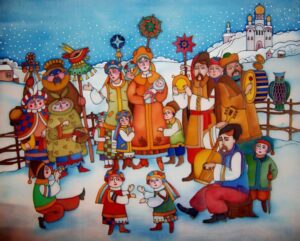
The famous holiday melody known globally as “Carol of the Bells” originated from a Ukrainian pagan New Year’s folk tune called “Shchedryk.” Composed by Mykola Leontovych and first performed by a student choir in Kyiv in December 1916, the original song’s lyrics recount a swallow returning in the spring to praise a household and wish its family prosperity and abundance.
Following the collapse of the independent Ukrainian People’s Republic and the rise of the Bolsheviks, the Ukrainian National Choir embarked on an international tour to promote Ukrainian culture and gather support for the newly formed state. In October 1922, the choir brought “Shchedryk” to the United States with a debut performance at Carnegie Hall, where it captivated American audiences.
During the European leg of the choir’s earlier tours, composer Leontovych was tragically murdered in January 1921 at his father’s home by an undercover Soviet secret police agent who posed as a traveler. This assassination was part of a broader historical pattern of suppressing Ukrainian culture and targeting the Ukrainian intelligentsia, a dynamic that echoes contemporary conflicts such as the killing of Ukrainian conductor Yuriy Kerpatenko in 2022.
After hearing the performance in New York, choral director and public school administrator Peter Wilhousky was inspired by the song’s bell-like melody. Because young choristers would not sing in Ukrainian, Wilhousky penned English lyrics focusing on the ringing of bells rather than the traditional swallows and household blessings. This English-language version, titled “Carol of the Bells,” was first recorded by Wilhousky’s school choir in 1936 and subsequently published as sheet music, sparking nationwide popularity.
Today, “Carol of the Bells” exists in more than 150 arrangements, featuring prominent interpretations by symphonic rock groups like the Trans-Siberian Orchestra and Mannheim Steamroller, vocal groups like Pentatonix, and various pop and country artists. The enduring melody also continues to serve as a symbol of cultural resilience and hope for Ukrainians, appearing in films and resonating deeply as the nation preserves its cultural traditions amidst ongoing conflict.