
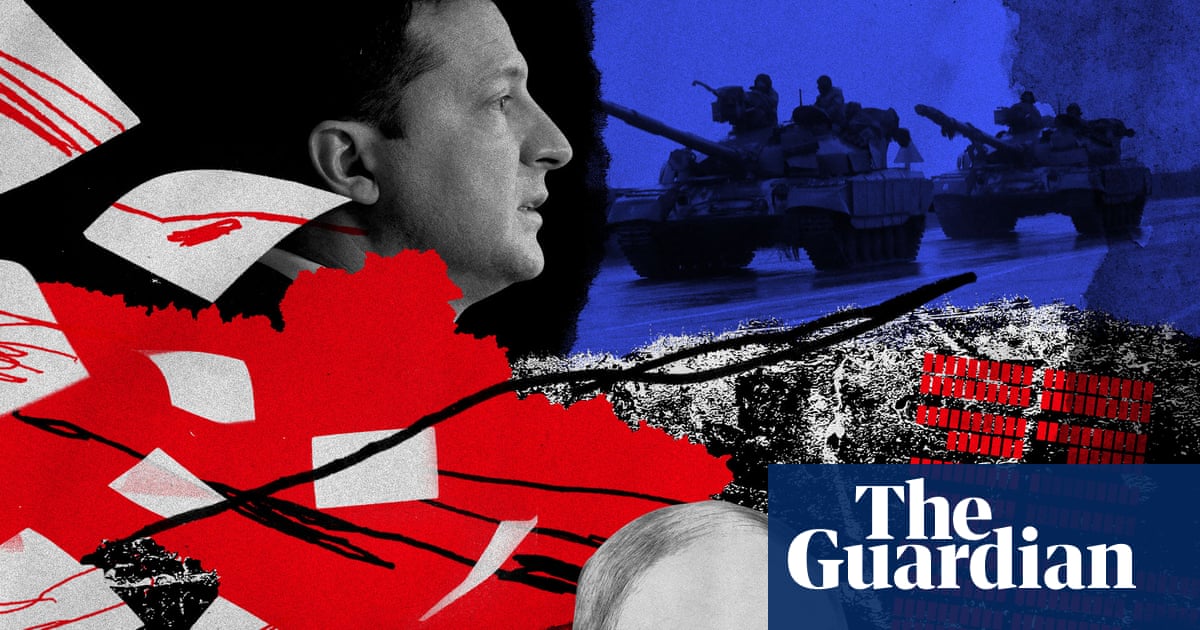
Drawing on accounts from over 100 intelligence, military, and diplomatic insiders across multiple countries, this exclusive review details how US and British intelligence services uncovered Vladimir Putin’s plans to launch a full-scale invasion of Ukraine, why European allies and Ukrainian leadership largely dismissed these warnings, and the subsequent lessons learned for global security.
Beginning in late 2021, US intelligence agencies, led by the CIA under William Burns, detected strong signals of an impending Russian invasion. Despite direct warnings from Biden and CIA briefings, Vladimir Putin remained fixated on grievances regarding Western strategic vulnerability. Meanwhile, British MI6 joined Washington in collecting detailed intelligence from satellite imagery, signals intercepts, and military planning sources, revealing that Moscow intended to push deep into Ukraine and enact regime change.
Despite this clear intelligence, European allies—such as France and Germany—remained profoundly skeptical. Haunted by the dubious intelligence used to justify the 2003 Iraq war and convinced that an invasion of this scale was fundamentally irrational and bound to fail, European leaders viewed the Russian troop buildup as mere saber-rattling or a negotiating bluff. Even Poland doubted a maximalist invasion, expecting at most a limited incursion in the Donbas region.
The Ukrainian government, particularly President Volodymyr Zelenskyy, also rejected the warnings for months. Fearing that public alarm and talk of war would trigger a catastrophic economic and political collapse from within, Zelenskyy dismissed the intelligence as scaremongering and actively suppressed wider preparations. Despite quiet contingency planning by Ukrainian military intelligence (HUR) and army commander Valerii Zaluzhnyi—who unsuccessfully pushed for martial law—the political leadership maintained that a full-scale assault was unthinkable. Even within Russia, Putin kept his circle small; the vast majority of political elites and military officials were left completely in the dark until days before the attack.
As the invasion date approached in February 2022, detailed American intelligence accurately outlined the multi-pronged invasion routes, planned airborne assaults on Hostomel airport, and targeted assassination lists. While Western embassies evacuated Kyiv and issued dire final warnings, European leaders like Emmanuel Macron and Olaf Scholz continued diplomatic efforts right up to the eve of war.
On February 24, 2022, Russia launched its “special military operation.” While the CIA and MI6 correctly predicted the invasion, they, alongside Moscow, severely miscalculated the outcome. Western agencies expected a rapid Russian takeover and planned to support a government-in-exile, while Putin’s military planners assumed minimal Ukrainian resistance. Instead, unexpected fierce Ukrainian defense, the preservation of vital infrastructure, and Zelenskyy’s dramatic shift into a wartime leader rallying the nation fundamentally upended the Kremlin’s strategy.
The intelligence failures surrounding the lead-up to the war triggered deep soul-searching across Europe. Intelligence agencies have since pivoted toward embracing worst-case scenarios and recognizing the danger of dismissing extraordinary geopolitical developments simply because they appear irrational.