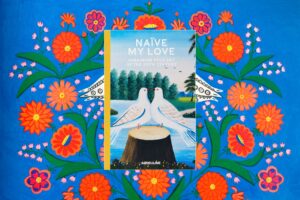
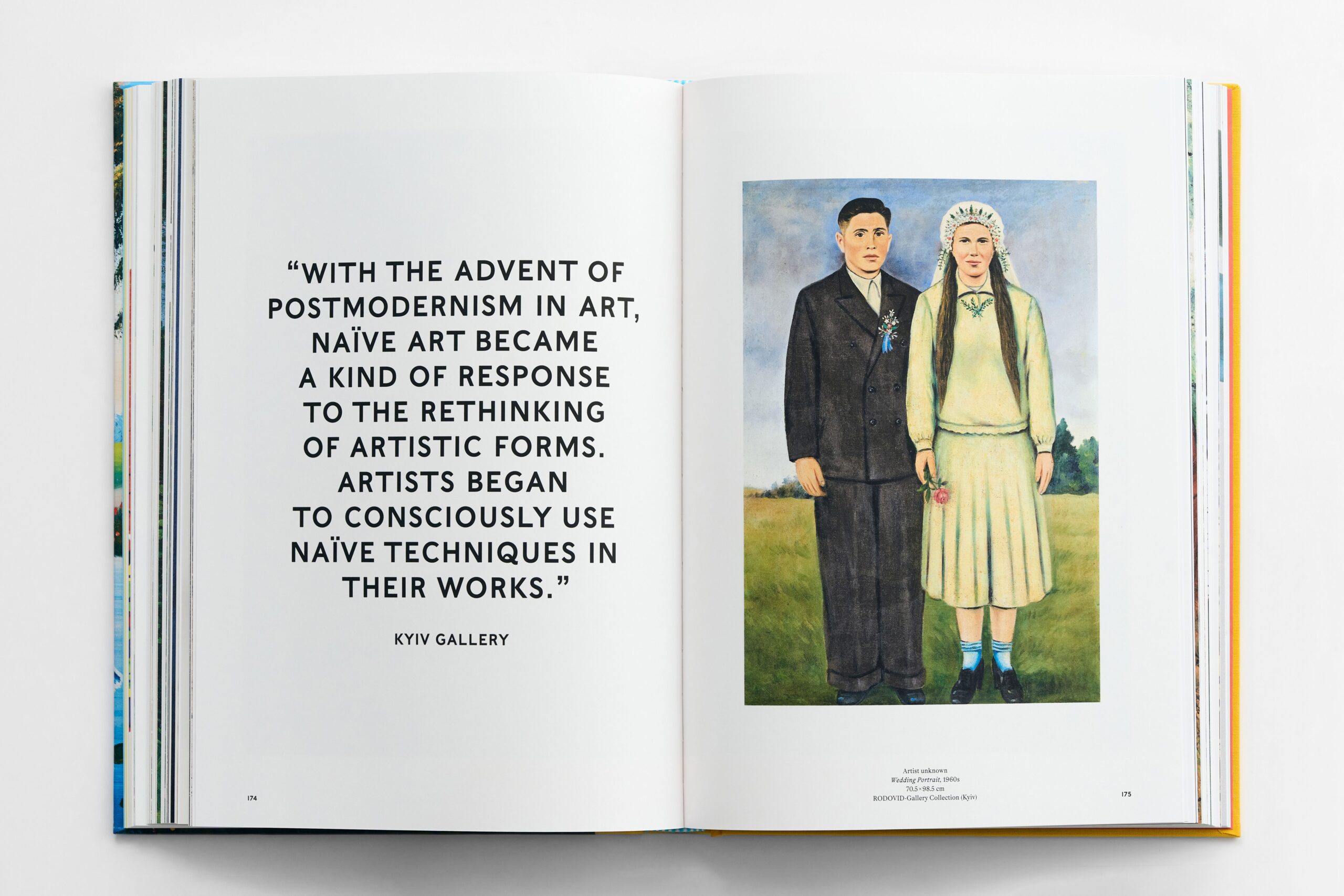
The publisher Assouline, in collaboration with the Ukrainian design and lifestyle brand GUNIA Project, has released *Naïve My Love: Ukrainian Folk Art of the 20th Century*, the imprint’s first book dedicated to Ukrainian culture. The volume brings international focus to Ukraine’s rich vernacular traditions, myths, and self-taught artists, offering a culturally specific lens distinct from narratives imposed by external powers like the Russian Empire and the Soviet Union.
For centuries, Ukraine’s artistic identity faced suppression. Under Russian imperial and subsequent Soviet rule, artistic production and its circulation were strictly controlled. Although the 1920s brought a brief modernist renaissance in cities like Kyiv, Kharkiv, and Odesa, Soviet authorities centralized the cultural system by 1932, enforcing Socialist Realism as the official doctrine. While avant-garde figures like Kazimir Malevich, Alexandra Exter, and Sonia Delaunay had deep personal or creative ties to Ukraine and drew heavy inspiration from its folk practices, their contributions were frequently absorbed into broader Russian or Western European histories. Meanwhile, folk traditions were often pigeonholed into a politically convenient, stereotyped image of rural innocence.
Operating outside formal academic institutions, self-taught “outsider” artists managed to maintain a degree of autonomy from official doctrines. Their work was deeply embedded in everyday life—seen in decorated ceramics, woven textiles, embroidered clothing, ritual rushnyks, and painted homes—and utilized archetypal symbols of fertility, protection, and life. Soviet authorities occasionally promoted specific folk artists like Maria Prymachenko and Kateryna Bilokur, but framed them narrowly as simple rural workers rather than serious contributors to the fine arts.
Creating the book required years of extensive research and ethnographic expeditions conducted by GUNIA Project alongside Ukraine’s leading art museums, archives, and artists’ families. Much of this heritage was fragile and survived only because it was kept in private homes or repurposed. This preservation effort has taken on urgent significance amid the ongoing war. The ongoing Russian invasion has destroyed significant cultural works and sites, such as the home and murals of self-taught artist Polina Raiko in Kherson Oblast, which were severely damaged by flooding following the destruction of the Kakhovka Dam.
By documenting these works, the book serves as a vital repository preserving the memory of overlooked creators and a cultural richness currently threatened by conflict. Ultimately, the authors and publishers hope to introduce international audiences, curators, and collectors to the depth, beauty, and unique identity of Ukrainian art beyond the context of war.