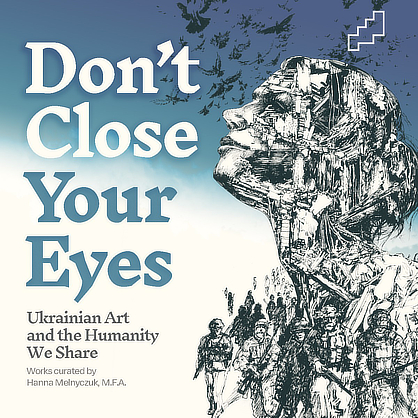
The University of New Haven’s Seton Art Gallery is hosting an exhibition titled “Don’t Close Your Eyes: Ukrainian Art and the Humanity We Share.” Running from November 2 through December 11, the display features works by 26 Ukrainian artists who have been impacted by the war, utilizing mediums such as painting, drawing, watercolor, ink, and paper cutting to document shelter, loss, and the disruption of daily life.
The exhibition was curated by Hanna Melnyczuk, an art and design professor at UMass Lowell. The project originated from a Zoom conversation among artist friends following Russia’s full-scale invasion of Ukraine in February 2022. Melnyczuk connected with Ukrainian artist Halyna Andrusenko via Instagram, and the initiative has since expanded into multiple exhibitions across various states, alongside a fundraising auction in New York City.
The featured artists employ diverse visual languages to process trauma, violence, and the constant threat of conflict. Inga Levi uses comic book aesthetics to capture daily war realities; Halyna Andrusenko portrays Lviv’s monuments wrapped in protective coverings and explores vulnerability through video; Danylo Movchan contrasts vibrant colors with tragic themes; Valeriia “T” Rybchenko depicts the emotional weight of war in a self-portrait; Ksenia Datsiuk expresses anxiety physically; Olga Zaremba symbolizes the pain of displacement through a suitcase; Olena Shtepura turns classical paintings into dissolving images of grief; and Natalia Kurnosova utilizes traditional paper-cutting techniques to create curtains when drawing became impossible.
In addition to the artwork, the exhibition incorporates written reflections by University of New Haven students from the history and political science courses of professors Dr. Bradley Woodworth and Dr. Lennon. Collaborating with Art & Design professor Dr. Deniz Basar and the gallery director, students participated in word-association workshops that translated their text responses into visual word clouds. Displayed alongside the art, these student writings provide an additional layer of witness, reflecting how a distant generation perceives and processes the impacts of war.