
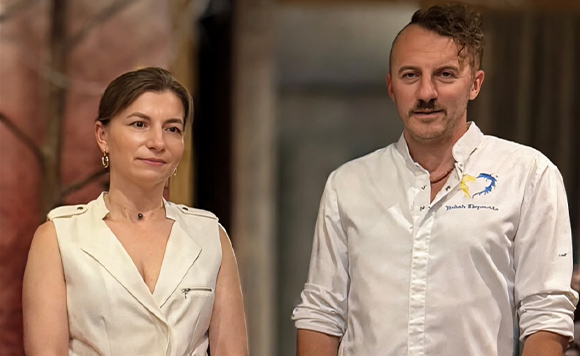
In Ukraine, food functions as a vital statement of national identity, a mission championed by chef Yevhen Klopotenko at his Kyiv restaurant, 100 Years Ago in the Future. Klopotenko utilizes historical recipes, traditional ingredients, and old cooking techniques to present Ukraine’s culinary heritage on a modern table. This cultural preservation work has taken on heightened urgency following Russia’s invasion, as the country strives to protect its traditions amidst ongoing conflict.
During a dining experience at the restaurant, introduced by food historian and researcher Olena Braichenko—who specializes in gastronomic heritage and collaborates with Klopotenko—guests are served dishes deeply rooted in regional flavors. The meal features inventive courses such as a wooden tasting box with honeycomb, bee pollen, and fruit jellies; roasted parsnip paired with cured meat, smetana, and dried marigold petals; and baked beef served with eggplant, cherries, dandelion capers, and huslyanka, a traditional Carpathian cultured sour milk.
Central to Klopotenko’s culinary mission is borscht, the iconic deep-red soup made with beetroot, herbs, and sour cream. Klopotenko played an instrumental role in securing international recognition for the dish, working alongside cultural experts and government institutions to advance Ukraine’s nomination to UNESCO. In July 2022, the UN agency’s Intergovernmental Committee inscribed the Culture of Ukrainian Borscht Cooking onto its List of Intangible Cultural Heritage in Need of Urgent Safeguarding, after Ukraine requested an expedited review due to threats posed by the war. The listing formally recognizes the tradition of preparing and sharing borscht without granting exclusive ownership to Ukraine.
Beyond his restaurant, Klopotenko’s efforts extend to reforming school meal programs to modernize menus for children and introducing Ukrainian food to global audiences. Notably, he and a Ukrainian delegation traveled to Japan to prepare borscht and dumplings for officials and journalists using ingredients sourced from war-affected regions. Through these initiatives, Klopotenko demonstrates that food can effectively cross political borders and introduce a nation’s culture to unfamiliar audiences, keeping Ukrainian cuisine both locally relevant and globally engaged.